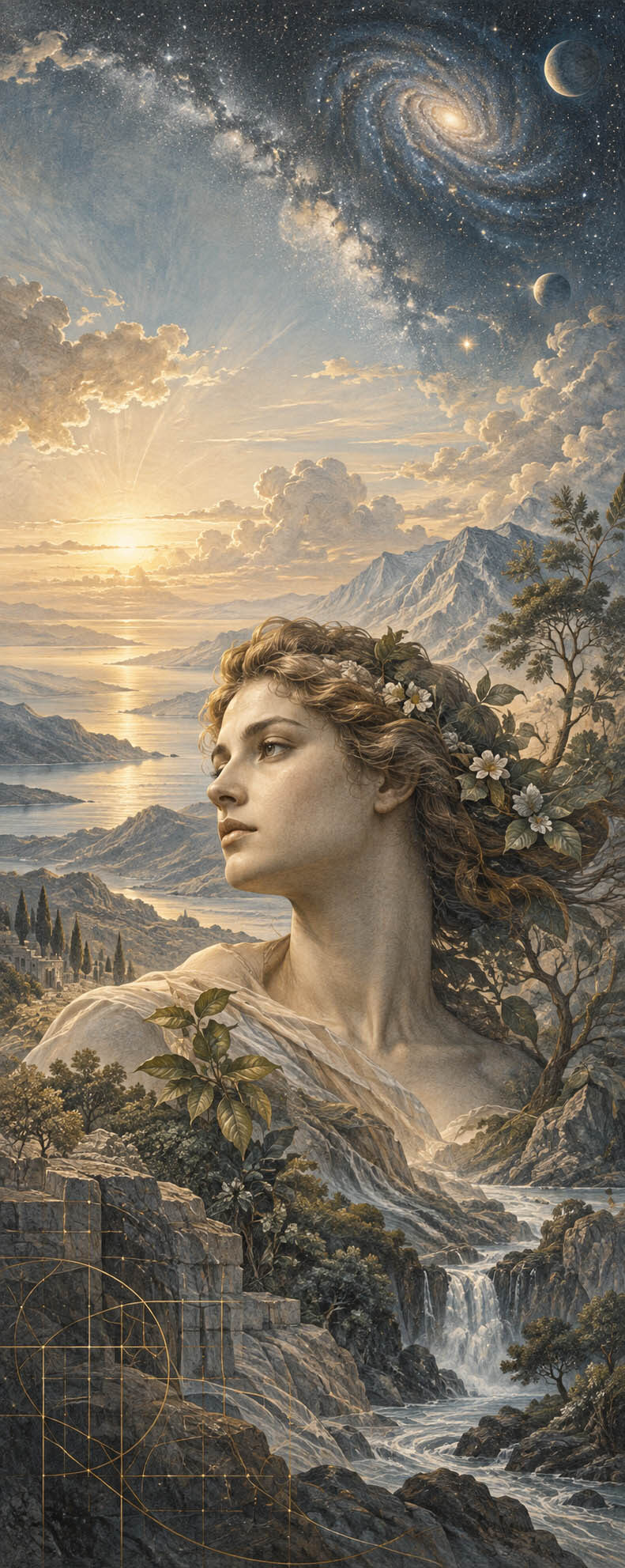
Manifesto in the Name of the Sciences of the Spirit
17/11/2026 To avoid misunderstandings, I shall begin by asking the reader to excuse my ignorance of the sciences of matter. My knowledge is of a spiritual order, and so different is it from material knowledge that throughout my work I have had no need of, nor even cited, any scientist, with the exception of Darwin, who is a naturalist. Having made this clear, I shall proceed to relate my philosophy to the most complex and advanced sciences, because I see that they have reached a point at which they border on the sciences of the spirit, and it is this relationship that I am interested in highlighting. If, then, I am mistaken in my interpretation or exposition of the physical sciences, the reader, besides excusing my errors, will know not to call my philosophy into question on account of my shortcomings in those sciences. My purpose is the same as ever: to lead towards knowledge of our mind and of the spiritual reality that underlies and permeates material reality.
Until less than two centuries ago, it would have occurred to no one to recall the existence of the sciences of the spirit, for they were a spontaneous expression of our nature. If we look closely at art, particularly the literary works of Romanticism, we shall see a constant effort to define the human being according to his behaviour in response to the stimulus of his feelings, which were presented in every possible variation, with the purpose of discovering our humanity and, if genius permitted, revealing what is highest in our condition. Suffice it to mention Victor Hugo and Beethoven. What happened afterwards?
Since my first work, I have been insisting on the process of individuation, externalisation and eventual alienation that man has undergone in our culture. I have dealt with the origins of this alienation and its development in different periods and places in my philosophy of history, and with the psychic process that has generated it in my Psychosophy. It will be understood that I cannot elaborate on that process here. Suffice it to say that over the past two centuries it has accelerated alarmingly, to the point where we can observe that artists and thinkers themselves have not only been its victims, but that their very art and thought are the product of their alienation from the spiritual faculties. Materialist and agnostic ideologues are the best example. Physicists are no exception, but we may excuse them because their subject has been matter; their specialisation has kept them apart from the sciences of the spirit. Let us see how we can overcome this situation and, if possible, reach an agreement with physicists.
A relatively recent discovery in the sciences of matter (wrongly called the sciences of Nature, because this presupposes that Nature is only matter), of far greater significance from a philosophical point of view than AI, is bringing about a change in perspective and vision owing to certain results arising from the application of quantum theory. The point at issue consists in recognising the intervention of consciousness in the observation of molecular phenomena. For some scientists, the matter ends there, with the change in the phenomenon generated by the particular observer. But for others, on considering that, if the phenomenon occurs in everything observed, there ‘must be’ a consciousness that transcends particular observers, this means a Consciousness that underlies Nature and precedes matter.